
| Servings per container | 32 |
|---|---|
| Serving size | 1 oz. (28g) |
| Calories | 110 |
| Nutrient | % Daily Value* |
| Total Fat 0g | 0% |
| Saturated Fat 0g | 0% |
| Trans Fat 0g | |
| Polyunsaturated Fat 0g | |
| Monounsaturated Fat 0g | |
| Cholesterol 0mg | 0% |
| Sodium 40mg | 2% |
| Total Carbohydrate 26g | 9% |
| Dietary Fiber 0g | 0% |
| Total Sugars 20g | |
| Includes 15g Added Sugars | 30% |
| Protein 1g | 2% |
| Vitamin D 0mcg | 0% |
| Calcium 0mg | 0% |
| Iron 0mg | 0% |
| Potassium 70mg | 1% |
* The % Daily Value (DV) tells you how much a nutrient in a serving of food contributes to a daily diet. 2,000 calories a day is used for general nutrition advice.
Ingredients: Dried diced Papaya, pure cane sugar. Unsulfured.
Price range: $19.99 through $39.88 — or subscribe to save 5%
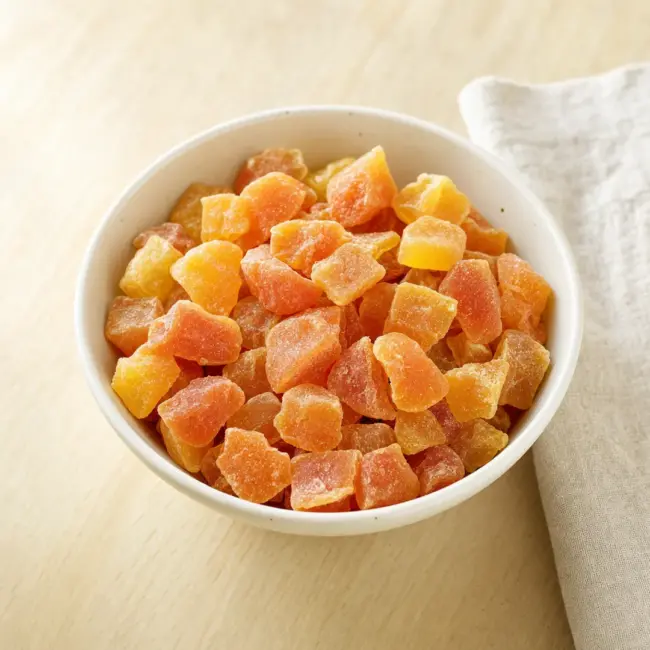
Dried Papaya Cubes | Sweetened
Skip or cancel anytime.
Free from the Top 14 allergens. Made on dedicated equipment. Allergen statement
Product Description
Gerbs Dried Papaya Cubes are sweet, tropical, and uniformly bite-sized, made with added cane sugar and produced in our dedicated 14-allergen-free facility in Johnston, Rhode Island. Free from all 14 major allergens. The cube format distributes evenly through granola, trail mixes, and baked goods, making these a reliable, allergen-safe tropical ingredient for home cooks and food service alike.
Ingredients
Papaya, Cane Sugar.
Allergen Declaration
Free From: peanuts, tree nuts, milk, eggs, gluten/wheat, soybeans, fish, crustaceans, mollusks, sesame, mustard, celery, lupin, and sulfur dioxide/sulfites.
All raw ingredients are processed, packaged, handled, stored, and shipped by trained staff in our family owned & operated facility in Johnston, Rhode Island on dedicated kosher-certified equipment. No co-packers. No co-manufacturers. For anyone with a mild to severe food allergy or a family with one, we wish to assure you that this is why Gerbs handles all aspects of production & operation. If you have any questions about your allergy and our products, please contact us at [email protected] or (401) 231-5181 before ordering.
Flavor & Texture Profile
Dried papaya cubes share the mild, tropical sweetness and soft chewy texture of sweetened papaya slices, in a uniform bite-sized format. The added cane sugar produces a bright, candy-like sweetness that makes these cubes popular as a trail mix component and granola ingredient. Their small, consistent size distributes evenly through recipes and provides reliable sweetness in every portion.
Storage Recommendations
Store Gerbs Sweetened Dried Papaya Cubes in a cool, dry place in an airtight container. Unopened, they keep for up to 12 months. After opening, consume within 3 months for best flavor and texture. The small cube format should be kept in a tightly sealed container between uses. Refrigeration after opening is optional but beneficial in warm or humid storage environments.
Key Health Benefits of Dried Papaya Cubes
Papain
Papaya is the primary commercial source of the proteolytic enzyme papain. While drying reduces some enzymatic activity, dried papaya cubes retain trace amounts of this digestive enzyme alongside the full nutritional profile of the fruit.
Vitamin C
Papaya is one of the richer tropical fruit sources of vitamin C, approximately 61.8 mg per 100g fresh (USDA FoodData Central). Dried papaya cubes retain meaningful vitamin C, supporting immune function and antioxidant defense.
Provitamin A
Beta-carotene content in papaya (approximately 274 µg per 100g fresh) concentrates in the dried cube form, providing a dietary source of provitamin A for vision, immune regulation, and skin health.
Potassium
Papaya cubes deliver potassium (approximately 182 mg per 100g fresh weight equivalent), an electrolyte essential for fluid balance, normal heart function, and blood pressure regulation.
Versatile Recipe Ingredient
The uniform cube format makes portion control and even distribution in recipes straightforward, a practical benefit for food service, granola production, and baking applications where consistent piece size improves final product quality. As with all foods, individual results may vary. Gerbs makes no medical claims.
What Are Dried Papaya Cubes?
When you’re shopping for dried papaya with food allergies in mind, knowing who handled your food matters as much as knowing what’s in it. Gerbs Dried Papaya Cubes are made in our family-owned, dedicated allergen-free facility in Johnston, Rhode Island. Our facility has never handled gluten, peanuts, tree nuts, crustaceans, mollusks, milk, eggs, sesame, or any of the 14 major allergens. No co-packers. No shared equipment. Every bag is packed by our own trained staff on dedicated kosher-certified equipment. That is the Gerbs Guarantee.
Papaya cubes are diced from fresh papaya (Carica papaya) before the drying process, resulting in a uniform, bite-sized piece that is easier to portion and distribute evenly in recipes than slices. Like our papaya slices, these cubes are sweetened with cane sugar, giving them that bright, tropical sweetness that makes papaya such a popular ingredient in fruit mixes, granola, and trail mixes. Papaya’s natural papain enzyme, vitamin C, and vitamin A precursors concentrate in the dried form alongside the added sugar.
The cube format is particularly useful for recipe development, granola production, and any application where even sizing and distribution matter.
Dried papaya cubes are fresh papaya (Carica papaya) that has been diced into small, uniform pieces before drying, resulting in a bite-sized format ideal for recipe use and portion control. Papaya is a large tropical fruit native to Central America that is now grown extensively across tropical Asia, Africa, and the Pacific. The cube format makes it easier to incorporate evenly into granola, trail mixes, oatmeal, and baked goods where consistent piece sizing matters. Like our papaya slices, the cubes contain added cane sugar for a bright, tropical sweetness. Papaya’s papain enzyme, vitamin C, and provitamin A content are concentrated in the dried form alongside the added sugar, a nutrient-dense ingredient choice for sweet applications.
How to Use Dried Papaya Cubes
Granola
Dried papaya cubes are a standout granola ingredient, their uniform size distributes evenly through granola clusters, delivering consistent tropical sweetness in every serving. The soft chew of the papaya cube contrasts pleasantly with the crunch of oats and seeds. Add after baking to preserve the chewy texture.
Trail Mix
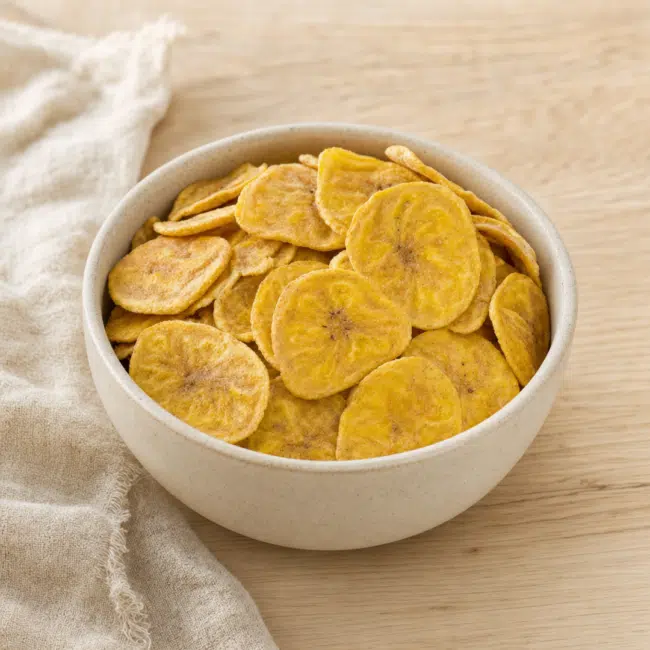
Combine dried papaya cubes with mango cubes, pineapple pieces, and banana chips for a fully tropical trail mix that is allergen-free throughout. The uniform cube format means every handful contains a predictable number of pieces, making trail mix portioning and reselling more consistent for food service use.
Tropical Snack Bowl
Mix papaya cubes, mango cubes, pineapple pieces, and dried goji berries for a custom tropical snack bowl assembled entirely from Gerbs single-ingredient products, fully allergen-free, fully traceable, and entirely assembled to personal taste preference.
Baking
Fold into muffin batter, tropical quick breads, and oat-based energy bars. The small cube format integrates naturally without the need for additional chopping, and distributes more evenly than larger irregular fruit pieces. Pair with pineapple and coconut flavors for a tropical baked good.
Yogurt and Oatmeal
Stir into plain yogurt or hot oatmeal as a sweetener-inclusive fruit addition. The papaya cubes provide gentle tropical sweetness and soft texture that integrates naturally into dairy and grain bases without requiring other sweeteners alongside them.
WARNING: California Proposition 65
WARNING: Consuming this product can expose you to chemicals including lead and cadmium, which are known to the State of California to cause cancer and birth defects or other reproductive harm. For more information go to www.P65Warnings.ca.gov/food.
FAQ
Are Gerbs Dried Papaya Cubes safe for people with food allergies?
Yes. Our facility has never processed any of the 14 major allergens. Gerbs Dried Papaya Cubes are produced in our dedicated allergen-free facility in Johnston, Rhode Island by our own trained staff with no co-packers. They are safe for individuals with any of the 14 listed allergen sensitivities.
What is the difference between papaya cubes and papaya slices?
Both are sweetened dried papaya from the same quality fruit. The difference is the cut format, cubes are diced into small, uniform pieces before drying; slices are larger, flatter sections. Cubes are better suited to granola, trail mixes, and baking applications where even size distribution matters. Slices are a more satisfying direct snack due to their larger size. Ingredients and allergen-free status are identical.
Do Gerbs Dried Papaya Cubes contain added sugar?
Yes. Like our sweetened papaya slices, the cubes contain added cane sugar.
Are these suitable for commercial granola production?
Yes. The uniform cube format, consistent sizing, and dedicated allergen-free production make Gerbs Dried Papaya Cubes a suitable ingredient for commercial granola production and food service applications requiring consistent, allergen-safe tropical fruit. Contact [email protected] to discuss wholesale availability and volume pricing.
How should I store Gerbs Dried Papaya Cubes?
Store in a cool, dry place in an airtight container. Consume within 3 months of opening. Refrigeration after opening is optional but recommended in warm or humid climates to maintain texture and prevent clumping.
Frequently Bought Together
Related products
Customer Reviews
You must be logged in to post a review.
Shop by Category
Find Your Safe Favorites
Seeds
Dried Fruit
Snack & Trail Mixes
Granola
Grains
Reviews